Survey results on recycling and reuse of demolition waste
.png)
How can we improve the recycling and reuse of demolition waste in Ukraine’s recovery?
This question was at the core of the workshop “Gaps in skills for handling demolition waste. Examples of demolition waste applications”, organised within the framework of the Debris2Resources (D2R) project, implemented with the support of the EU LIFE Programme.
The event brought together representatives of local communities, experts, and other stakeholders involved in demolition waste management. It focused on key challenges and capacity needs related to strengthening professional competencies in this field.
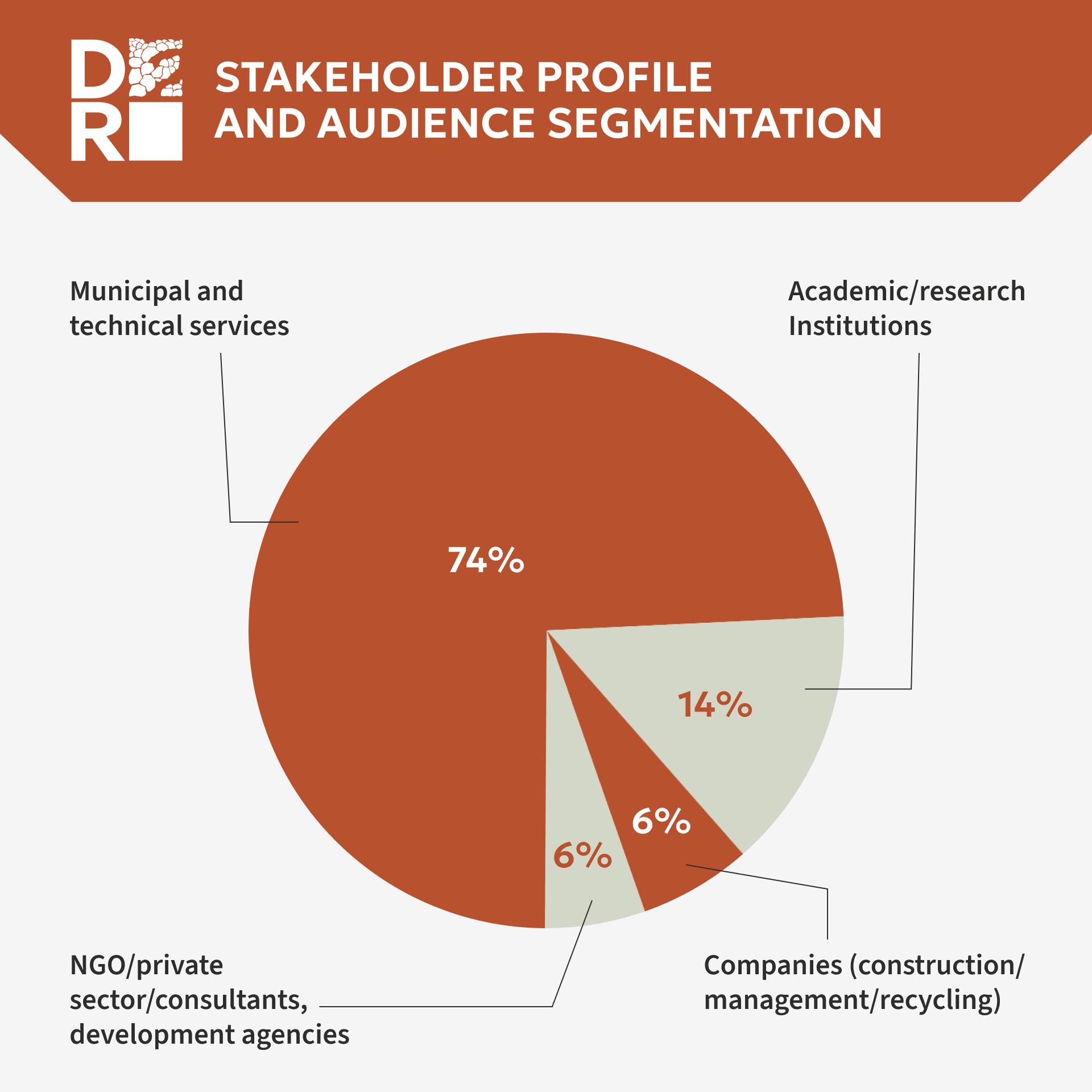
The discussion was informed by the results of a survey conducted among 147 stakeholders across different regions of Ukraine, including Mykolaiv, Odesa, Kherson, and Dnipropetrovsk regions, as well as Kyiv and the Kyiv region. The analysis combines quantitative survey data with practical insights gathered during discussions with communities. The distribution of respondents by organisation type is presented in Figure 1.
One of the most notable findings is that the largest share of respondents (41%) were unable to clearly identify the regulatory acts that complicate their work. Among those who did respond, the most frequently mentioned were the Law of Ukraine “On Waste Management” (27%) and the procedure for temporary storage (25%).
This distribution does not indicate a lack of knowledge, but rather reflects the complexity of the regulatory framework and uncertainty in its practical application. In particular, stakeholders face difficulties in identifying priority regulations and understanding how to apply them without the risk of non-compliance. The main barriers in demolition waste management are presented in Figure 2.

Overall, the responses reveal an interconnected chain of challenges, starting from insufficient capacity and inadequate sorting, leading to lower material quality, increased risks, and ultimately the disposal of waste instead of its reuse.
In this context, the demand for support is clearly systemic. Stakeholders do not point to isolated solutions but emphasise the need for a comprehensive approach that combines financing, infrastructure, coordination, and practical knowledge. This structure of needs is summarised in Figure 3.
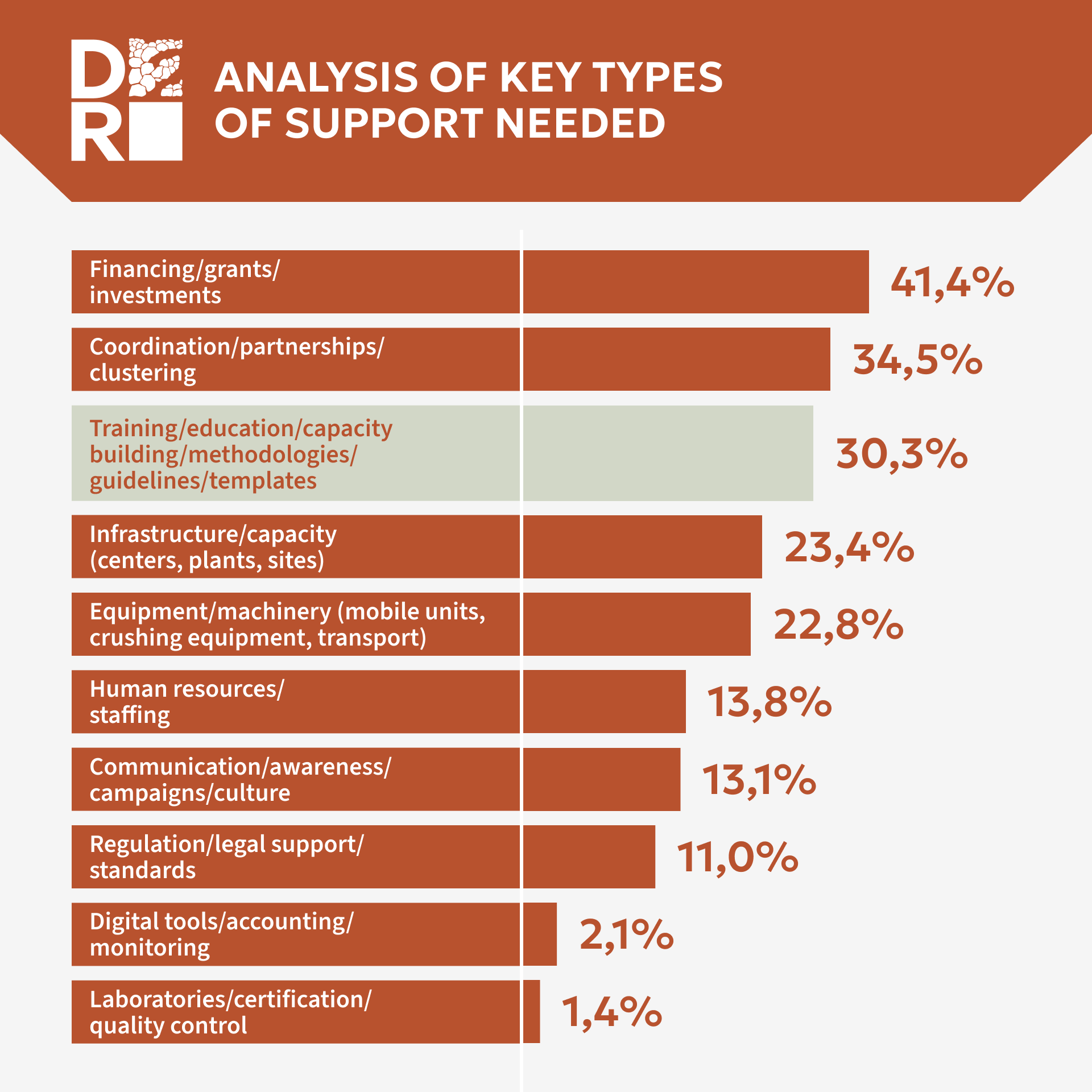
Funding, grants, and investments (41.4%) are identified as the most critical factor, highlighting that the key barrier is not only knowledge, but the ability to implement solutions in practice. This includes access to resources for equipment, site organisation, logistics, operational services, and documentation. In the context of municipalities, funding acts as an enabling mechanism for the entire system.
Coordination and partnerships (34.5%) are the second most significant area, underlining the cross-municipal nature of the challenge. Aligning roles between authorities, operators, and contractors, strengthening cooperation, and ensuring clear responsibilities across all stages are essential for effective waste management.
The need for training and applied methodologies (30.3%) is also significant. Importantly, stakeholders emphasise practical tools, including step-by-step guidelines, standard procedures, procurement templates, and real-life case studies that can be directly applied in their work.
Infrastructure and capacity (23.4%) and access to equipment (22.8%) remain critical conditions for system implementation, including the establishment of processing facilities, temporary storage sites, and access to specialised machinery.
Training needs directly reflect the barriers stakeholders face in practice. The most in-demand topics include regulatory requirements and their implementation, financial mechanisms, standards, risk management, handling hazardous waste such as asbestos, as well as classification, tracking, and interaction with regulatory authorities. These priority areas are presented in Figure 4.
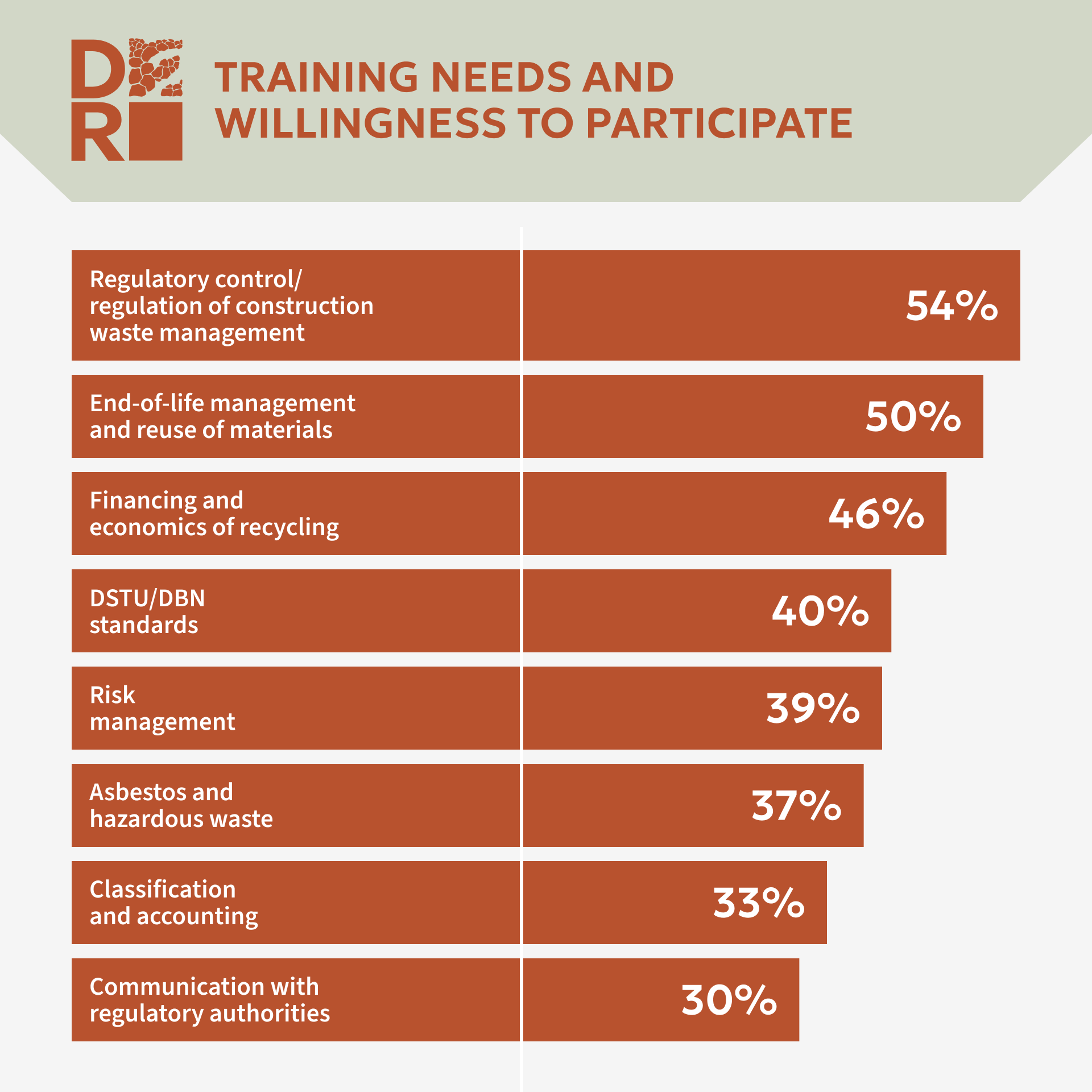
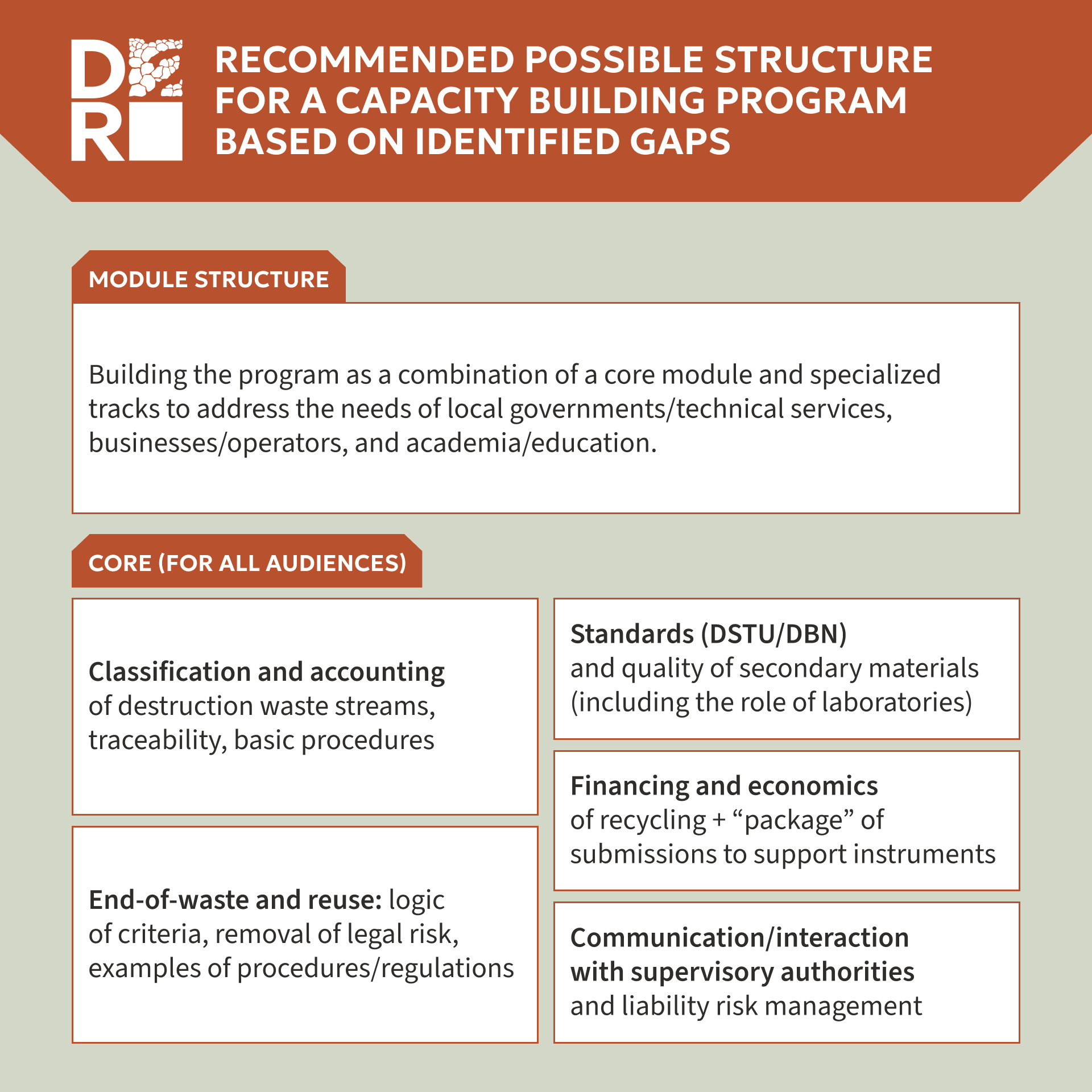
This confirms that the demand for training is a direct continuation of systemic challenges and is focused on strengthening practical capacity. Based on these findings, a structured approach to capacity building has been developed, with key elements presented in Figures 5 and 6.
Discussions with communities further confirmed that the main barriers include limited funding, insufficient technical capacity, and regulatory constraints. In particular, existing rules do not allow the full integration of recycled materials into construction processes, even when they are already being used in practice.

Additional challenges include hazardous waste, particularly asbestos, the lack of established markets for most material streams, and reduced investment attractiveness in areas affected by visible destruction.
At the same time, some communities are already testing practical solutions. In Irpin, approaches to demolition and sorting are being implemented, investments are being made in crushing equipment, and recycled materials are used for infrastructure recovery. In Borodianka, secondary materials are already used in road repair, while the community is also working with international partners on solutions for brick reuse and asbestos management.
The results show that effective demolition waste management requires a holistic approach that covers all stages, including regulation, safe handling, material quality testing, economic viability, and market demand.
At the same time, these challenges outline clear directions for action. These include simplifying and clarifying the regulatory framework, developing approaches that enable waste to be treated as a resource, and ensuring accessible financing at the local level.
An equally important component is the development of practical tools and digital solutions that enhance transparency, traceability, and trust in the system.
Together, these steps create the foundation for shifting from a reactive response to destruction towards the systematic implementation of circular approaches in Ukraine’s recovery.