First year of LIFE D2R: Consortium partners review progress and next steps
.png)
On 7 July 2026, LIFE D2R consortium partners met in Cascia (Umbria, Italy), together with representatives of Ukrainian municipalities to review the project’s first-year results, discuss progress across all work packages and align priorities for the next phase. The meeting formed part of the consortium’s capacity-building activities, supporting knowledge exchange and coordination among project partners.
During its first year, the consortium laid the groundwork for practical debris management solutions. This work has included assessing the needs of Ukrainian municipalities, developing methodologies, preparing pilot sites and training programmes, and creating tools to support the future scaling of the project’s solutions.
The partners also reviewed progress across the project's key areas, including pilot implementation, training development, communication activities and impact assessment, while defining priorities for the next stage of implementation.
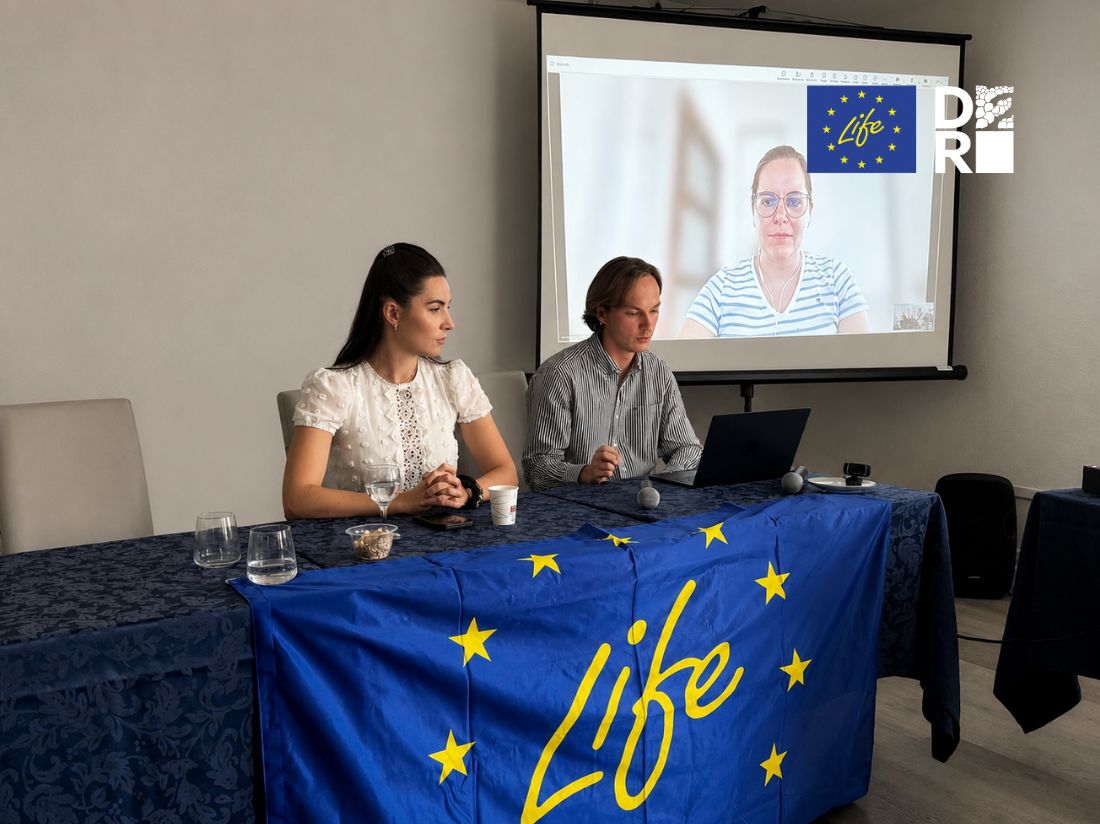
Mathieu Morival, Project Coordinator and representative of NEO ECO, presented the project’s key milestones and progress towards the timely preparation of its first reporting package for the European Commission.
Iryna Yarmolenko from IRS presented the results of a comprehensive assessment of current debris management practices, municipal needs and stakeholder engagement. This work provides an evidence base for developing practical solutions and supporting their implementation in Ukrainian communities.
Special attention was given to developing tools based on the principles of circular reconstruction. Vladyslav Antipov from CERN announced that the debris management methodology and the Circular Comprehensive Business Model are approximately 95% complete. Following testing in the pilot municipalities, these tools are expected to provide a solid foundation for scaling up reconstruction solutions across Ukraine.
Lidiia Shymon from NEO ECO presented progress in establishing pilot sites and regenerative hubs. Three pilot municipalities, Irpin, Borodianka and Hostomel, have been selected to test debris sorting, treatment and preparation for material reuse. This represents an important transition from methodology development to practical implementation.
Another key session focused on capacity building and knowledge exchange. Silvia Brembati from GBC Italia presented the progress achieved in developing the project’s training programme. The consortium has already completed a needs assessment involving 147 respondents and started developing the training curriculum and the Knowledge Hub, an online platform that will provide open access to project knowledge, tools and resources.
Svitlana Kyrii and Maryna Naumenko from ReThink presented the project’s communication and dissemination results for the first year, including the development of the communication strategy, awareness-raising activities, thematic events and regular communication of key milestones. This work has helped increase the visibility of circular approaches to debris management and engage municipalities, public authorities, businesses and international partners.
Representatives of CERN also introduced the project’s framework for monitoring its environmental, economic and social impacts. The framework will enable the consortium to assess the effectiveness of the proposed solutions once they are tested in practice.
Sofiia Shytiak from the Lviv City Institute outlined the consortium’s work to ensure that the project’s results remain relevant and applicable beyond the LIFE funding period. The team is developing a strategy to scale up D2R solutions, adapt them to the needs of other municipalities and support their integration into Ukraine’s reconstruction process.
The meeting concluded with a financial reporting session, during which the consortium reviewed project reporting procedures, budget implementation and coordination priorities for the next phase in line with LIFE Programme requirements.
The meeting confirmed that LIFE D2R is moving from research, assessment and methodology development towards pilot implementation, capacity building and the practical testing of circular debris management solutions in Ukrainian communities.